Does chess have a plot?
What are games saying when they're not saying anything

A thought exercise that I use when tutoring true newbies in chess (which has happened maybe thrice in my life) is to remember that fundamentally, it’s a metaphor for medieval combat. So, your knights want to act like cavalry (move early, unpredictably), your rooks want what a castle wants (unobstructed views), your pawns… fuck your pawns.
In this sense, chess has a “story” (or, at least, each individual match has a story). But it has a plot in the same sense that Sudoku has “math” — the bishops could just as easily be called X’s, rooks could be +’s, knights could be L’s. There could be as much plot as, say, tic-tac-toe. This is evident when you see really minimalist chess sets: it’s just geometry. In my house, I have a Grateful Dead chess set. With it, you can play out an imaginary battle between 60’s Jerry Garcia and 80’s Jerry Garcia, assisted by Donna Jean Godchauxs and Phil Leshs. (The rooks are tombstones for everyone that died over the years.) …It doesn’t quite work.
Is it better to add, or to remove?
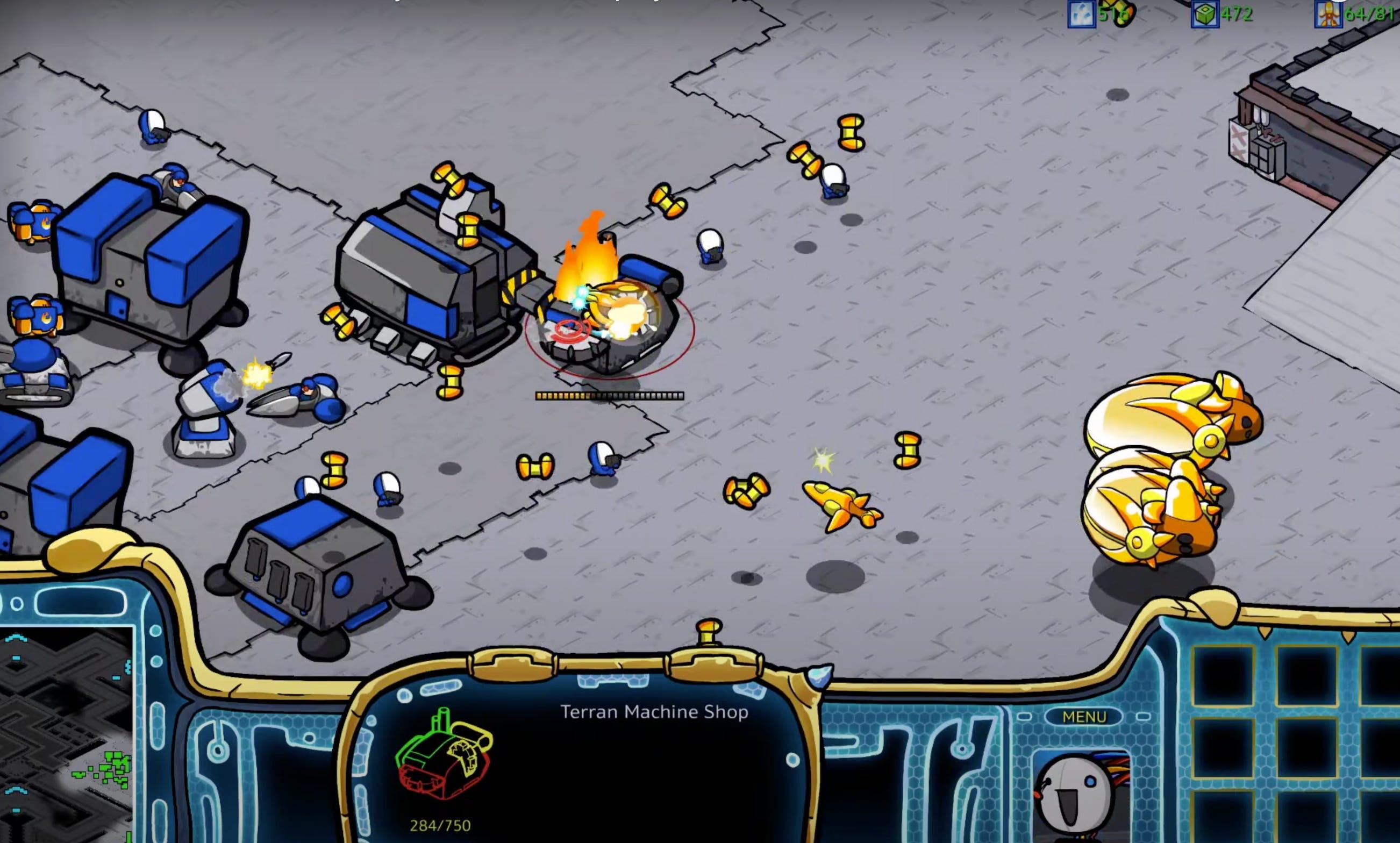
Some more complex games could, theoretically, have their plot removed. StarCraft is really just a game of resources, unit producers, and units, with an intricate rocks-paper-scissors of what-beats-what. But if it’s not an epic interplanetary battle between species with an absolutely bitchin’ soundtrack, then what’s the point? You would lose a lot in the abstraction.
Other games, I’m not even sure you could remove the thematic elements. What would RollerCoaster Tycoon be as a fully abstracted game? You would have a two-dimensional space, with little dots that have resources that you’re trying to extract, and you have to use resources to place hubs that attract those dots… I dunno man. At the end of the day, designing a twisty 3D thing for “dots” to ride is gonna start looking a lot like a roller coaster.
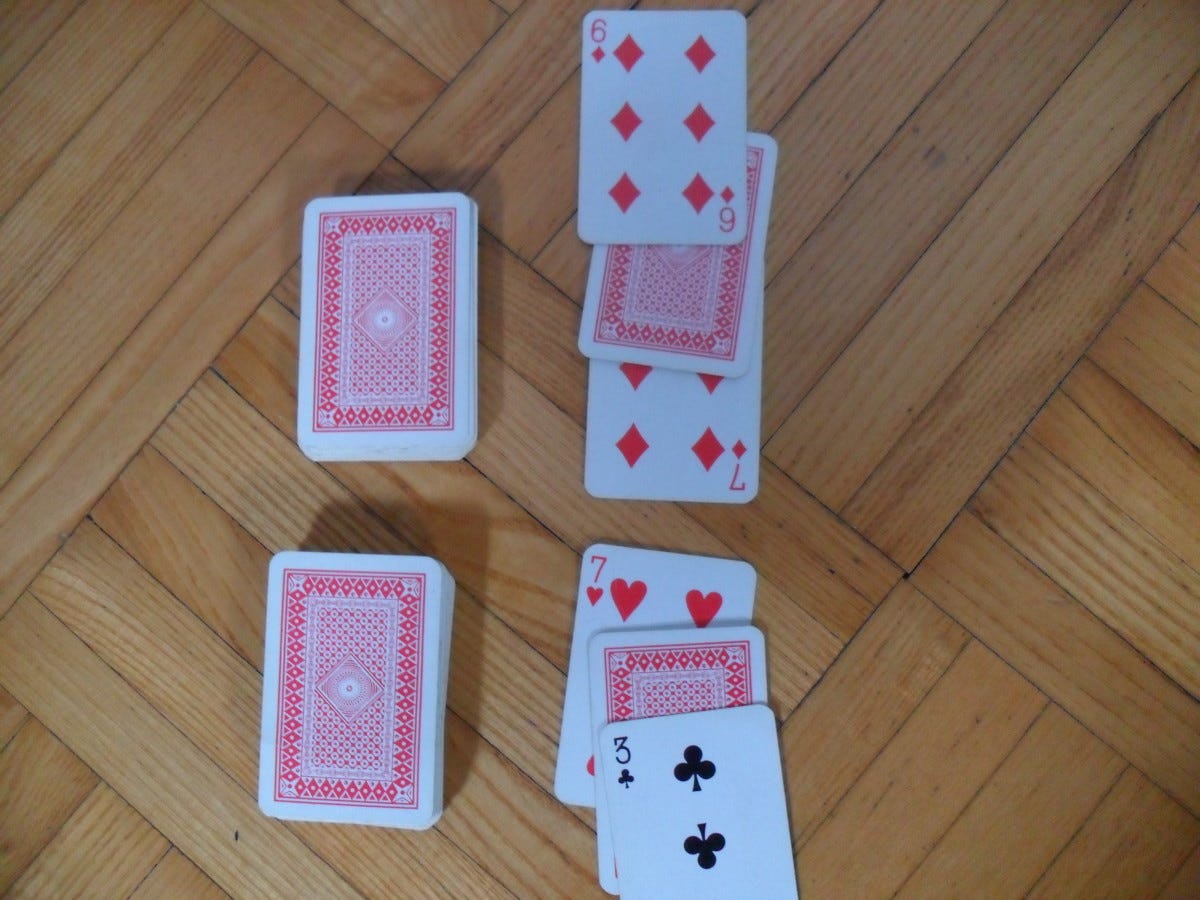
On the flip side, you might try to add a story and stakes to try to turn a small game into a bigger one. This is common in card and dice games, like War.
All video games also do this, although more successfully: first-person shooters are really just clicking objects on your screen really fast. Rocket League is just soccer but they’re cars. (ReMatch is just Rocket League but it’s people.) I’m working on a game based on the Battle of Midway, and actually coding it lays bare what’s really happening: you have planes (ovals) that shoot bullets (circles), all launched by aircraft carriers (rectangles.) I could just have it play as a series of CollisionShape2D nodes, and then it would look even more ass than it already does.
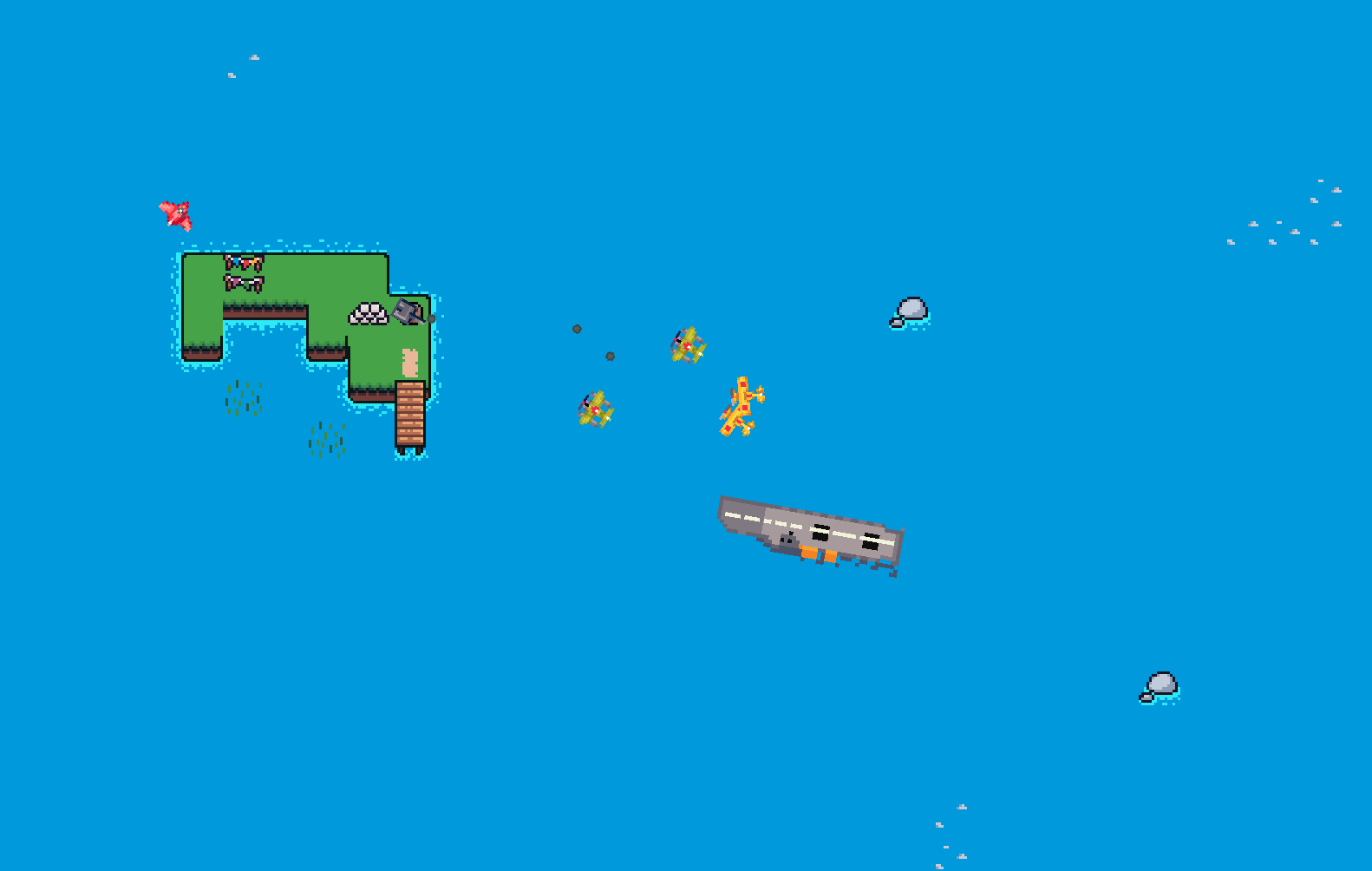
Obviously, I’m trying to do the opposite. Every change that turns “circle hits other circle” into “convincing air-to-air combat” is a win for the game. The more that each dot moves towards another dot like a plane is a win. Eventually, they won’t feel like sprites being removed from a database, it’ll be Captain John C. So-and-So getting shot down, and it’ll be a big loss for all of us.
It only works if it works
One problem (of many) with War is that, as a game, it doesn’t feel anything like combat. You have little to no agency, and winning or losing is basically predetermined. (Wow it’s like, a metaphor, maaan.) Chess does kind of feel like medieval combat. It’s tricky, tactical, and occasionally protracted. You might “siege” an enemy king who’s holed up in a castle, or throw wave after wave of sacrificial attacks. The actual gameplay of StarCraft and RollerCoaster Tycoon and Arkham Asylum all do the thing that game reviewers love to repeat: “It really does make you feel like a [space marine/theme park manager/Batman.]” The non-gameplay elements only add to that feeling.
I’ll try not to be a snob about it
I got into a debate with a friend recently about whether chess is a better game than Magic: The Gathering. I like Magic, but my basic argument was that games are better when you can’t take anything out and have them still work. Magic, now 30 years into its run as a game, has so, so much that can be taken out. In fact, almost every game mode of Magic involves banning a significant chunk of the cards that have been issued. My friend’s anti-chess argument was that chess sucks for everyone who hasn’t spent years getting good at it.
Important fact: this friend spent years in high school getting really good at Magic. And why did he do that? Because the cards have sick fireballs on them, or a dragon, or a goth babe. The art promised a game that was rich and wildly fascinating, and encouraged him to suffer through years of confusing mechanics until he enjoyed the game as a game. Do I think games are better when they advertise themselves? No. But damn do I wish my games advertised themselves.